IT assets that provision, certify and retire themselves.
ip·Solis sits between your CMDB, your IAM and your runbooks. Employees self-serve VDIs, shared desktops and SaaS. Managers approve in one click. Leaver events deprovision automatically — with a full audit trail.
By downloading you agree to our Terms and Conditions. Free use is restricted to non-commercial purposes.
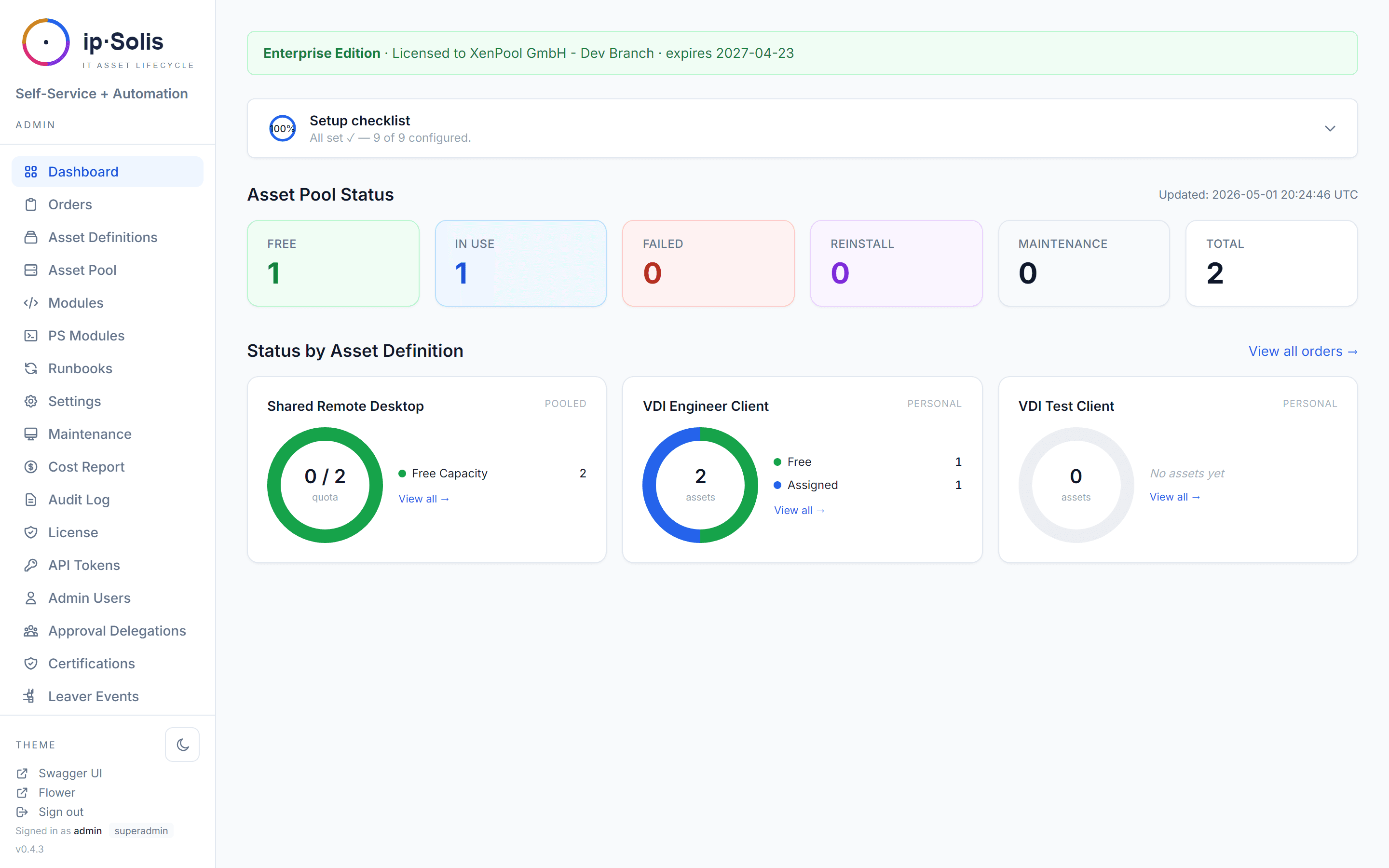
What ip·Solis does
Self-service portal
Employees request access to VDIs, shared desktops, SaaS or any IT asset. Managers approve in one click. No tickets, no waiting.
Runbook automation
Chained PowerShell 7 steps execute against AD, SCCM, XenServer, VMware and any system you script. Critical-step semantics and overlap protection built in.
Compliance by default
Access certification campaigns for ISO 27001, SOX and PCI. Append-only audit log with JSON diffs. SCIM 2.0 leaver events that deprovision automatically.
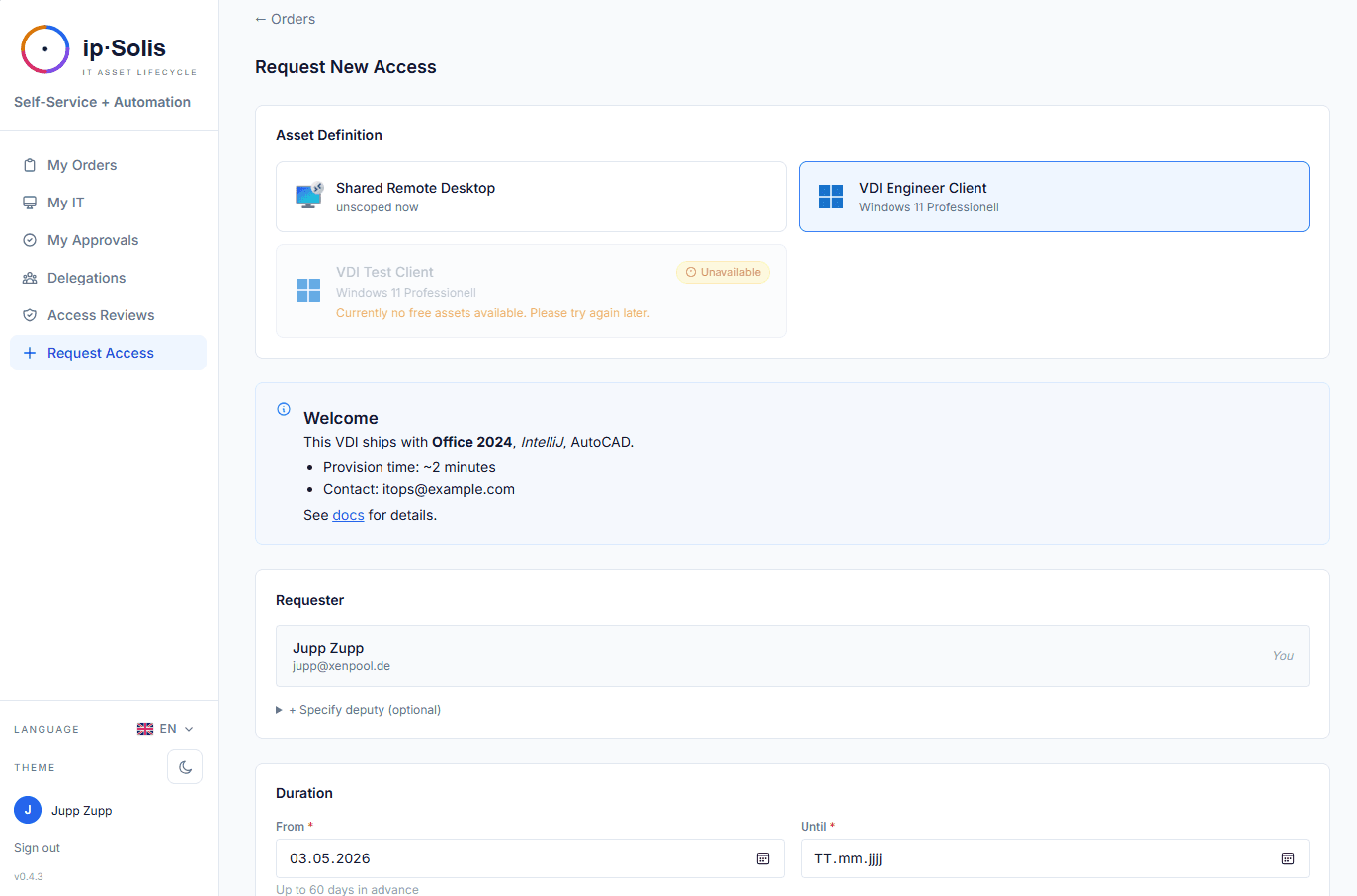
A portal employees actually use
My IT, request access, see your orders. Designed for the 99% of users who do not want to learn ITIL.
- Browse asset definitions filtered by entitlement
- Order with reason and start date — managers approve in one click
- See live status from Pending Approval through Provisioned
- Cancel before processing, or revoke access when no longer needed
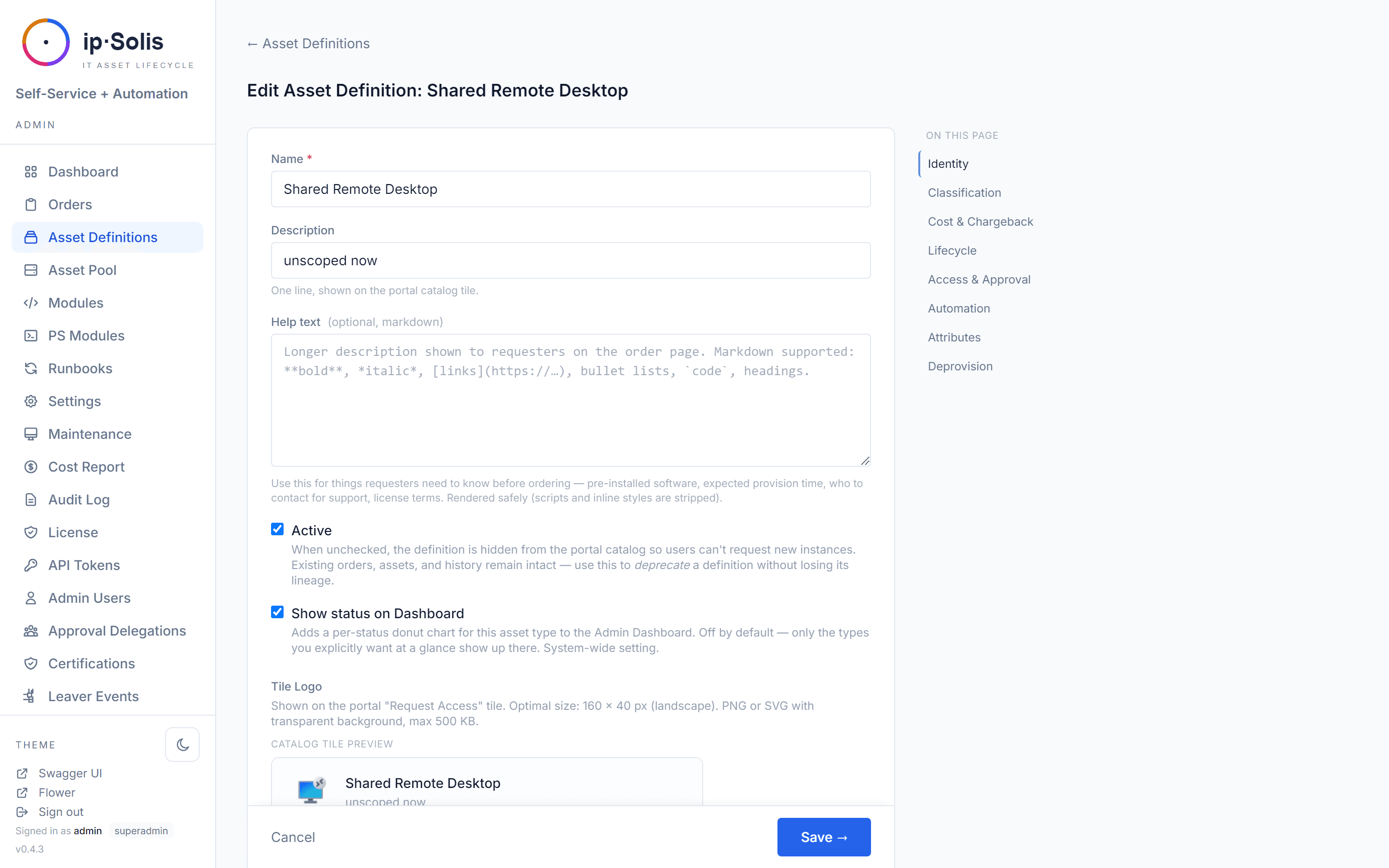
Asset definitions, pooled or personal
Define what an asset is once, then assign it as a Personal entitlement or share it from a Pool with a quota and expiry.
- Pooled assignment for VDI farms, lab desktops or SaaS seats
- Personal assignment with capacity and expiry dates
- Recycle workflows return assets to the pool when revoked
- Deprovision automatically on leaver events
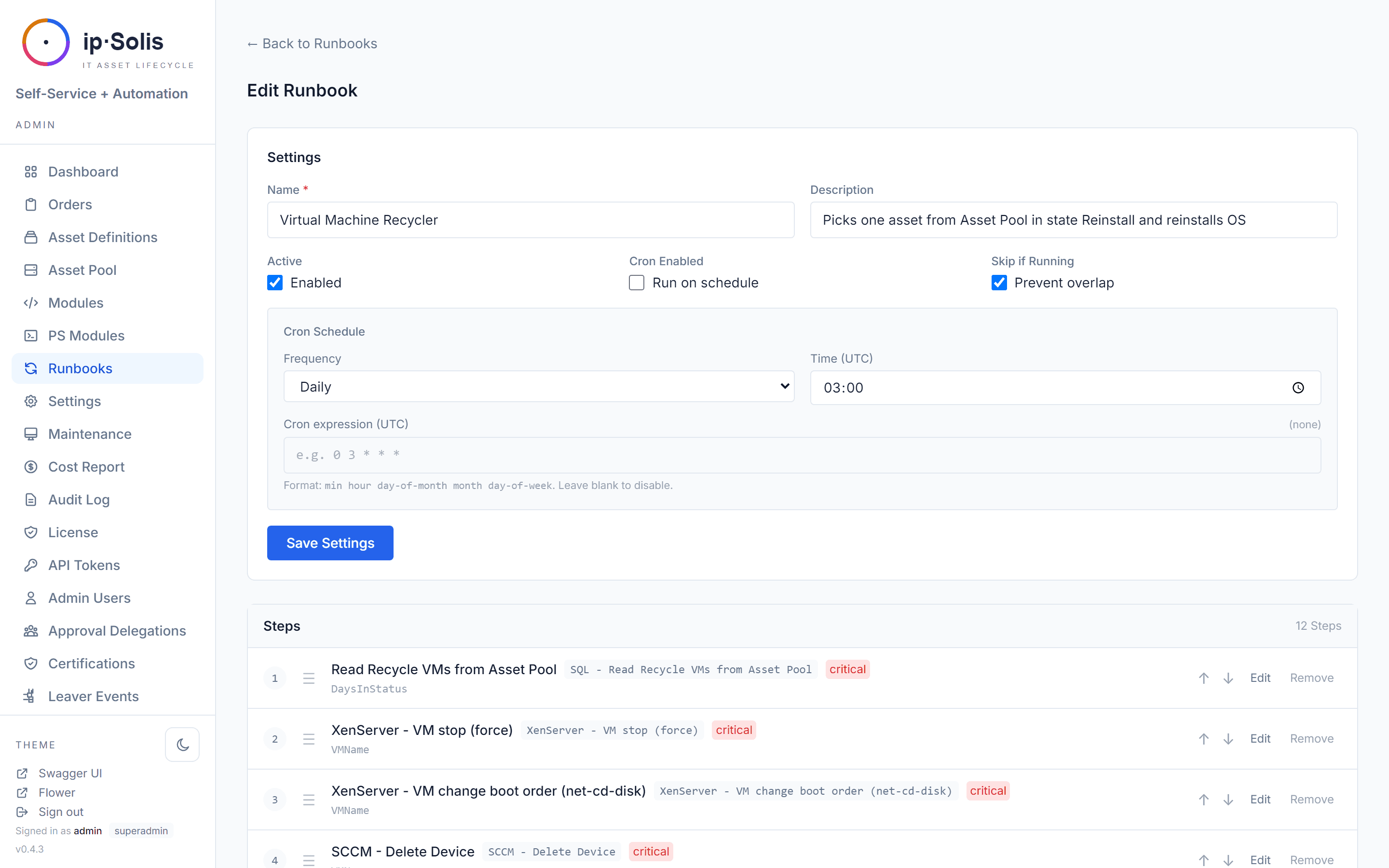
PowerShell 7, scheduled and observable
Reuse the scripts you already wrote. Chain them into runbooks with critical-step semantics, run them on cron, watch them in Flower.
- Native PowerShell 7 worker on Linux — Kerberos / GSSAPI for SCCM
- PSGallery and manual module upload supported
- Cron schedules with overlap protection
- Per-step output, return codes and timing in the order log
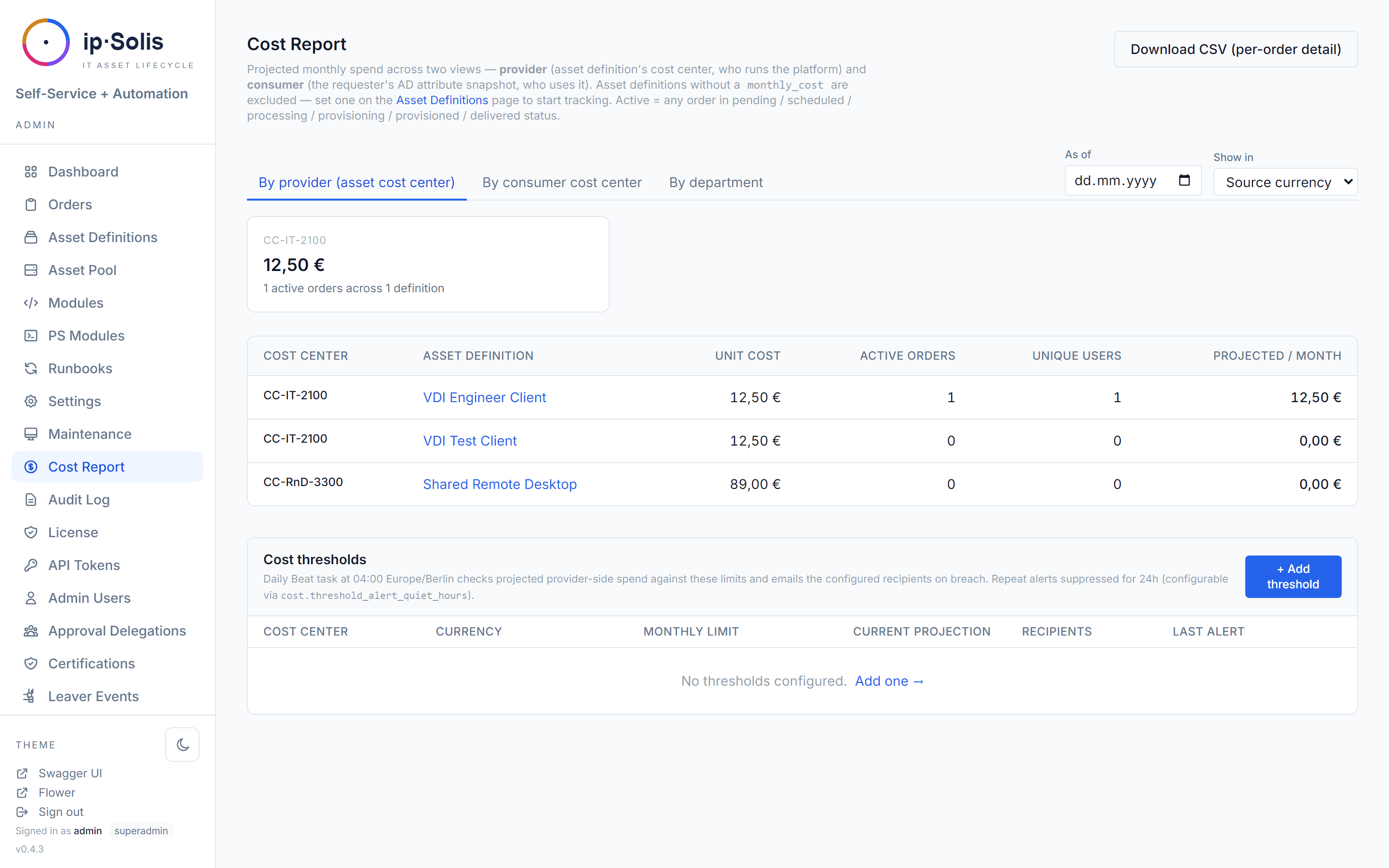
Cost report by provider, cost center and department
See what each provider costs and who consumes it — with daily threshold alerts and CSV export. No separate FinOps add-on.
- Group by provider, consumer cost center or department
- Daily threshold checks at 04:00 Europe/Berlin
- Email alerts when a budget is at risk
- CSV export for finance and chargeback workflows
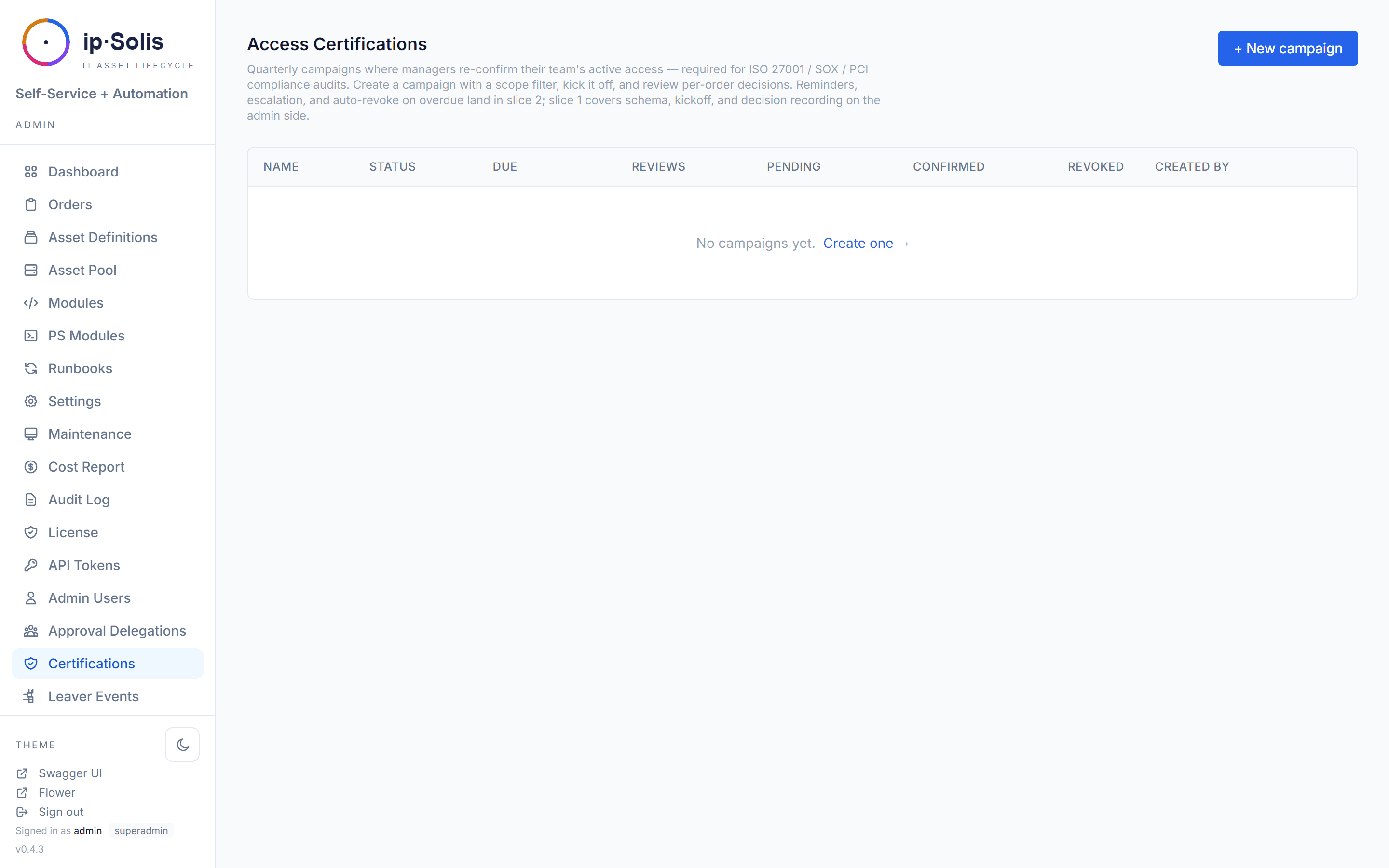
Access certifications, scheduled and trackable
Run periodic campaigns asking managers to recertify access. Track who reviewed what, and when, against ISO 27001 / SOX / PCI requirements.
- Per-asset and per-user certification campaigns
- Manager-driven approve, revoke or delegate decisions
- Decision log with full attribution
- Export evidence for auditors
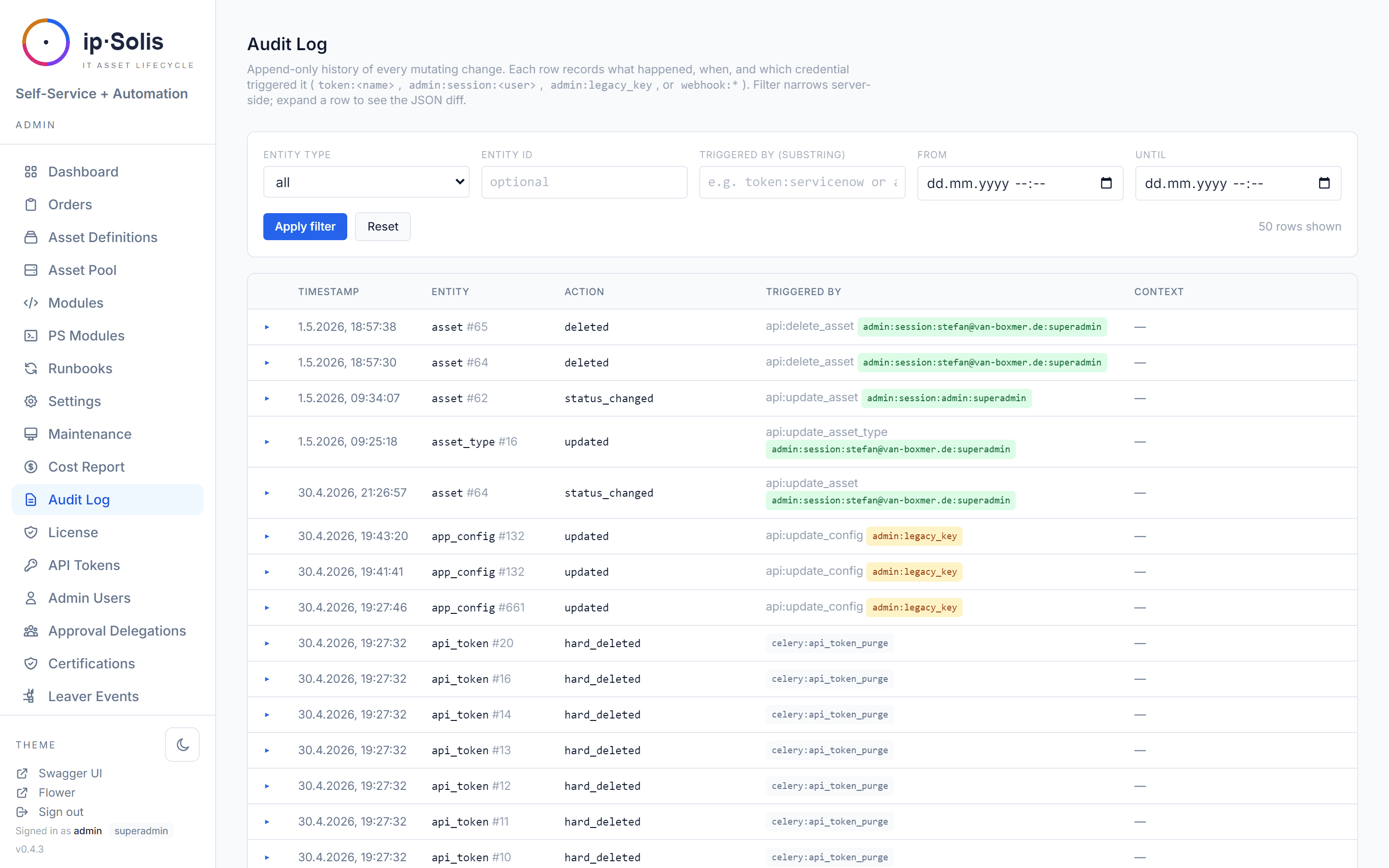
Append-only audit log with JSON diffs
Every change attributable to a user, an admin session, an API token or a webhook. JSON diffs of the before / after state. Never edited, never deleted.
- Token, admin-session and webhook attribution
- Before / after JSON diffs on every mutation
- Search by actor, asset, time window or change kind
- Streaming export for SIEM integration
Define. Request. Automate.
Three steps cover ninety percent of the IT lifecycle. The other ten percent is what runbooks are for.
Define an asset
Describe the asset once: type, assignment model, capacity, runbooks, entitlements. Pool or Personal.
Employees request access
They pick from what they are entitled to. Managers approve in one click. The order enters the queue.
Runbooks do the rest
PowerShell 7 steps run against AD, SCCM, XenServer, VMware. Critical steps fail loudly. The audit log records everything.
Questions teams ask before they buy
Provision the next asset before lunch.
Show us your hairiest provisioning workflow. We will model it as an asset definition and a runbook on the call.